"Baby, baby, baby what's wrong with you
I'm getting so tired of treating me the way you do
I'm getting tired, tired as any man can be
Take all my troubles and throw them in the deep blue sea"
After an absence of several years, playing mostly juke joints in the south, Nighthawk returned to Chicago and attempted to reestablish himself on the local blues scene. Competition was tough for Nighthawk who didn't play in the popular styles of the day. Nighthawk did find some club work and supplemented this by playing at the Maxwell Street open air market on Sunday mornings during the warm months. Johnny Young and John Wrencher often backed Nighthawk while playing on Maxwell Street. Nighthawk related his dissatisfaction with Chicago to writer Don Kent: "the only work he could get was one-nighters in small bars, hustling on Maxwell Street and a job as a sideman on one Chess session. He told me he frankly preferred the South. It was cheaper, apt to be less violent than the City, and he was better known."7
Nighthawk benefited somewhat from the blues resurgence of the 1960's and was written up and recorded by blues fans and scholars. In fact 1964 was his busiest year on record in some time. He was filmed in a documentary about Maxwell St. called "And This Is Free" as well as recording for the Chess, Decca and Testament labels.
Pete Welding had formed Testament records in the early 1960's as one of the handful of pioneering labels started by blues enthusiasts. Of the label, Welding noted: "I started Testament Records in 1963 to issue some of the recordings of blues and black folksong I had been making over the previous four or five years. During that time I had recorded, first in my hometown of Philadelphia and then in Chicago where I moved at the beginning of 1962, a fair number of artists whose music, I felt, deserved to be heard. Having a good-paying job at the time, I didn't have to worry overmuch about the records paying for themselves, so I put out what I thought was interesting and worthwhile. Come to that, Testament never had any commercial pressures behind its releases, so these were as irregular as they were unusual and, I hope, valuable in documenting a number of the music's overlooked genres and performers." He recorded Nighthawk with his partners Johnny Young and John Wrencher on October 14, 1964 cutting seven sides. The chemistry between the three is evident but it was Nighthawk, above all, who commands attention with his remarkable guitar work and his powerful but understated singing.
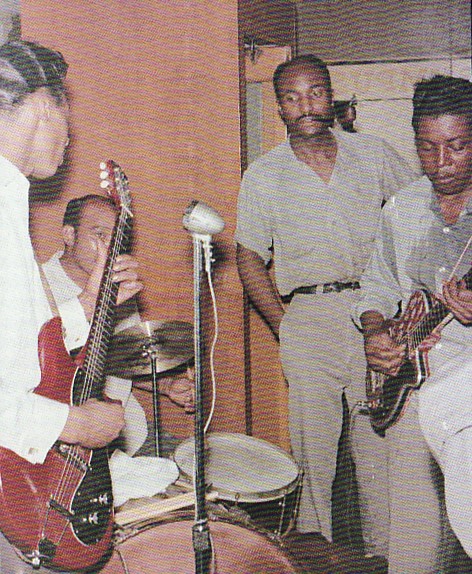
Robert Nighthawk, photo by Frank Scott, probably Chicago, 1965
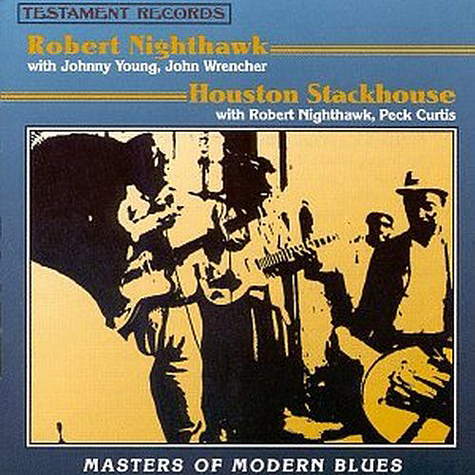
In 1964 Nighthawk was recorded at a concert at the University of Chicago with Little Walter and Johnny Young. The song "Kansas City Blues" can be found on the CD Masters of Modern Blues Vol. 4 — Robert Nighthawk / Houston Stackhouse. Hightone Records, which has been reissuing the Testament catalog, has come out with Down Home Slide and Down Home Harp which contain four previously unreleased live Nighthawk tracks from this same concert. Writer Don Kent was a witness to this concert and described it this way: "Of course, I had heard 'bottleneck' guitar before. Muddy often, Big Joe (alas, not so often), Jimmy Brewer, Arvella Gray; many of the singers working in Chicago. But not often have I felt an effect so intensely as when the first pulsating notes, ripped from the guitar by the slide, charged the Hall, sobbing behind the gloomy voice that was as heavy as a dead hand. It appeared as if Nighthawk had cowed the musicians working with him, as well as the audience; lonely, brooding figure, not quite at ease on the stage, pulling together moments of private sadness and hidden violence."7
Nighthawk was 55 at the time of these recordings and had been playing guitar since the early 1930's and his musical abilities are at their peak. Showing his versatility, he plays both the conventional picking approach represented by his restrained, imaginative work on "Crowing Rooster Blues", "Bricks in My Pillow", "Kansas City Blues" and the lovely "Merry Christmas Baby" and playing bottleneck on "Black Angel Blues", "I'm Getting Tired" and "Crying Won't Help You." Pete Welding says of these last three: "his slide work on these three is simply masterful — delicate, smooth, perfectly controlled, full of sustained invention, and conceived in much longer, more interesting phrases than is usual for this style...He seems, in fact, to be playing complete 12-bar solos. These three selections may well be among the most interesting, creative and, possibly, important bottleneck performances of the postwar period." Welding said of this session that it "resonates in my mind as perhaps the single finest one I was ever privileged to do...This is my favorite Testament session."11
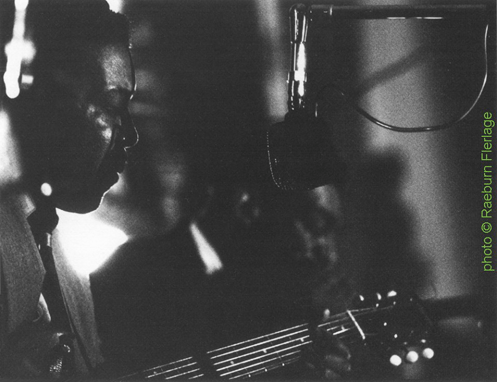
Robert Nighthawk and Little Walter, University of Chicago, 1964
From Chicago Blues As Seen From The Inside: The Photographs of Raeburn Flerlage

From the exhibit Amplified: Chicago Blues at the Chicago History Museum
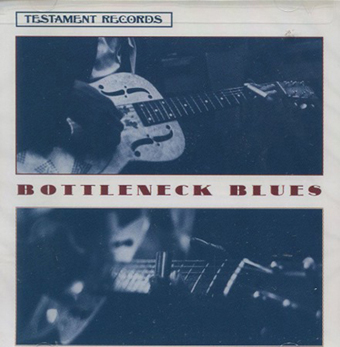
The bulk of Nighthawk's Testament sides have been reissued on the CD Masters of Modern Blues Vol. 4 — Robert Nighthawk / Houston Stackhouse. The following are stray tracks that appear on other Testament collections: "Blues Before Sunrise" can be found on Modern Chicago Blues; "Meet Me In the Bottom" can be found on Johnny Young & Friends; an alternate take of "Crying Won't Help You" can be found on Bottleneck Blues; "That's All Right", "Everything Gonna Be Alright", "Anna Lee" can be found on Down Home Slide and "Sweet Little Woman" can be found on Down Home Harp.
Masters Of Modern Blues — Complete Tracklist
- Blues Before Sunrise
- Black Angel Blues
- Maggie Campbell
- Crowing Rooster Blues
- I'm Getting Tired
- Bricks in My Pillow
- Bricks in My Pillow (alternate take)
- Merry Christmas Baby
- Crying Won't Help You
- Crying Won't Help You (alternate take)
- Kidman Blues
- Meet Me In The Bottom
- Kansas City Blues
- That's All Right
- Everything Gonna Be Alright
- Anna Lee
- Sweet Little Woman
Track 1 · October 14, 1964
Johnny Young — Guitar
John Wrencher — Harmonica
Modern Chicago Blues (TCD 5008)
Track 7 · October 14, 1964
Johnny Young — Guitar
John Wrencher — Harmonica
Bottleneck Blues (TCD 5021)
Track 11 · May 1964
Johnny Young — Vocal, Guitar
John Wrencher — Harmonica
Bottleneck Blues (TCD 5021)
Tracks 2–6 & 8–10, 12 · October 14, 1964
Johnny Young — Guitar
John Wrencher — Harmonica
Little Walter — Harmonica (track 8, May 1964 Live at University of Chicago, Mandel Hall)
Masters Of Modern Blues: Robert Nighthawk / Houston Stackhouse (TCD 5010)
Track 12 · 1964
Johnny Young — Guitar, Vocals
Johnny Young And Friends (TCD 5003)
Tracks 14–16 · May 1964 · Live at University of Chicago, Mandel Hall
Johnny Young — Guitar
Little Walter — Harmonica
Down Home Slide (TCD 6010)
Track 17 · May 1964 · Live at University of Chicago, Mandel Hall
Johnny Young — Guitar
Little Walter — Harmonica
Down Home Harp (TCD 6011)